
Legal technology is no longer a side topic. It has become the backbone of how modern law firms and corporate legal departments operate. The ABA’s 2024 Legal Technology Survey Report showed that 65% of firms budgeted for tech, and the figure jumped to 90% among larger firms. Nearly 75% of attorneys reported using cloud computing for their work. These numbers confirm that the digital shift is here to stay.
For professionals, the challenge is balancing the workload with learning new systems. Research, drafting, and client demands have not slowed down. That is why some turn to annotated bibliography writing services online to offload academic or research-heavy tasks. Freeing time this way allows them to build the tech skills now expected in legal practice.
This guide explores the top legal technology trends in 2025. From AI and cloud tools to cybersecurity, blockchain, hybrid courtrooms, and analytics, here is how technology is transforming law.
|
Key Takeaways
|
Artificial Intelligence Is No Longer Optional
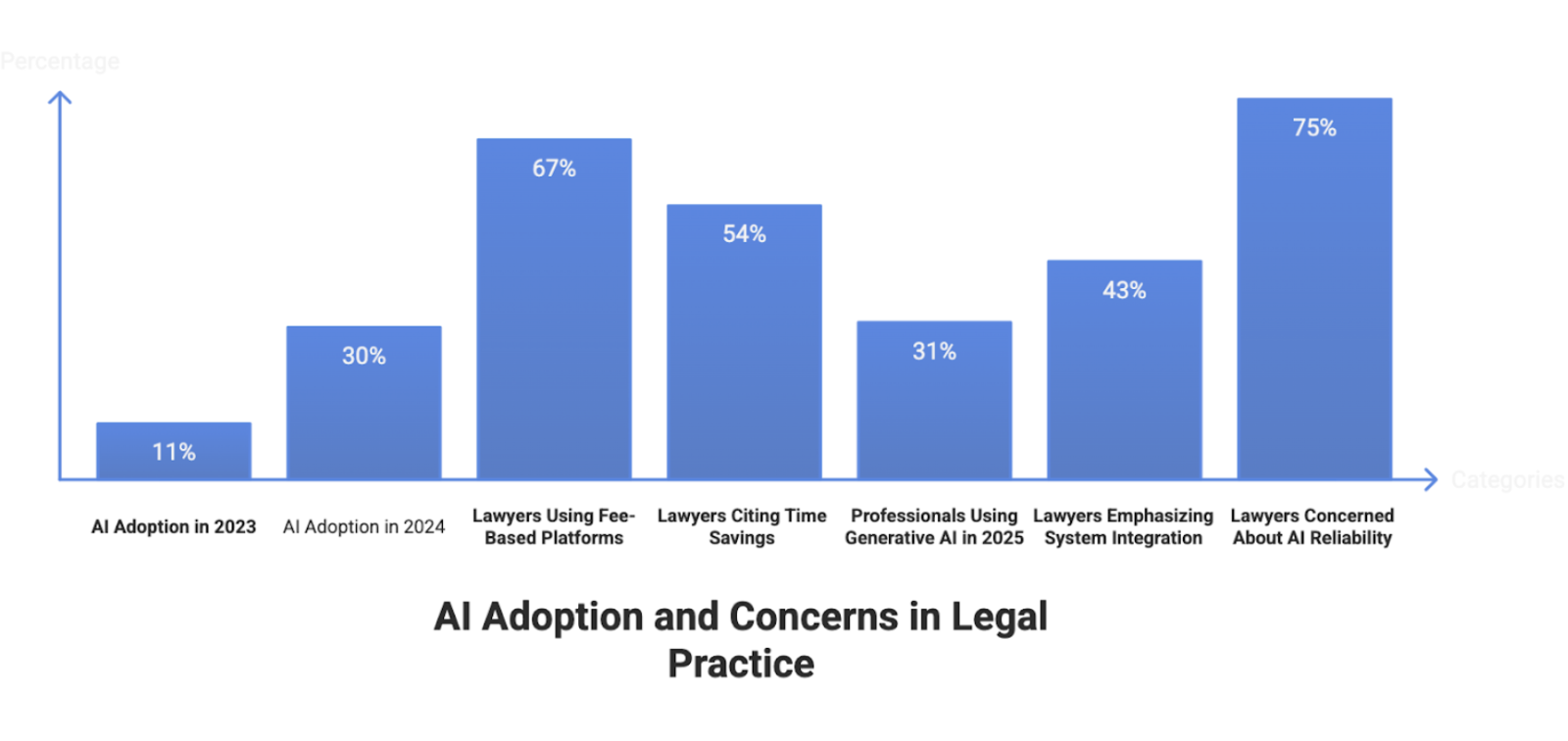
AI has gone from pilot projects to daily use. In 2023, only 11% of firms used AI. By 2024, that number reached 30%. Larger firms led the way, but smaller firms are now adopting AI to stay competitive.
AI in Legal Research and Document Review
AI platforms can scan thousands of cases in seconds. This gives attorneys a speed advantage that traditional research cannot match. The ABA reports that 67% of lawyers use paid research platforms. More than half say these tools save time. Still, accuracy issues remain. Studies show AI systems can produce 17% to 33% hallucinations, which makes human oversight essential.
AI-Powered Drafting and Client Interaction
Generative AI is now producing first drafts of contracts, pleadings, and even client emails. In 2025, 31% of professionals reported using AI drafting tools, up from 27% in 2024. Client-facing chatbots are also common. They handle intake, scheduling, and FAQs, giving lawyers and paralegals more time for strategy.
This shift is changing careers. Lawyers skilled in AI use are earning more. On average, AI-fluent lawyers report salaries 56% higher than peers without those skills.
Ethical and Regulatory Implications
AI does not reduce professional responsibility. The ABA’s 2024 Formal Opinion 512 emphasized that judgment and oversight must remain with lawyers.
Concerns are still high. Seventy-five percent of attorneys report worries about bias, reliability, and hallucinations. State bars are updating professional conduct rules to require disclosure and accountability when AI is used.
Cloud-Based Practice Management Takes Center Stage
Alt tag: Cloud tool adoption by attorneys
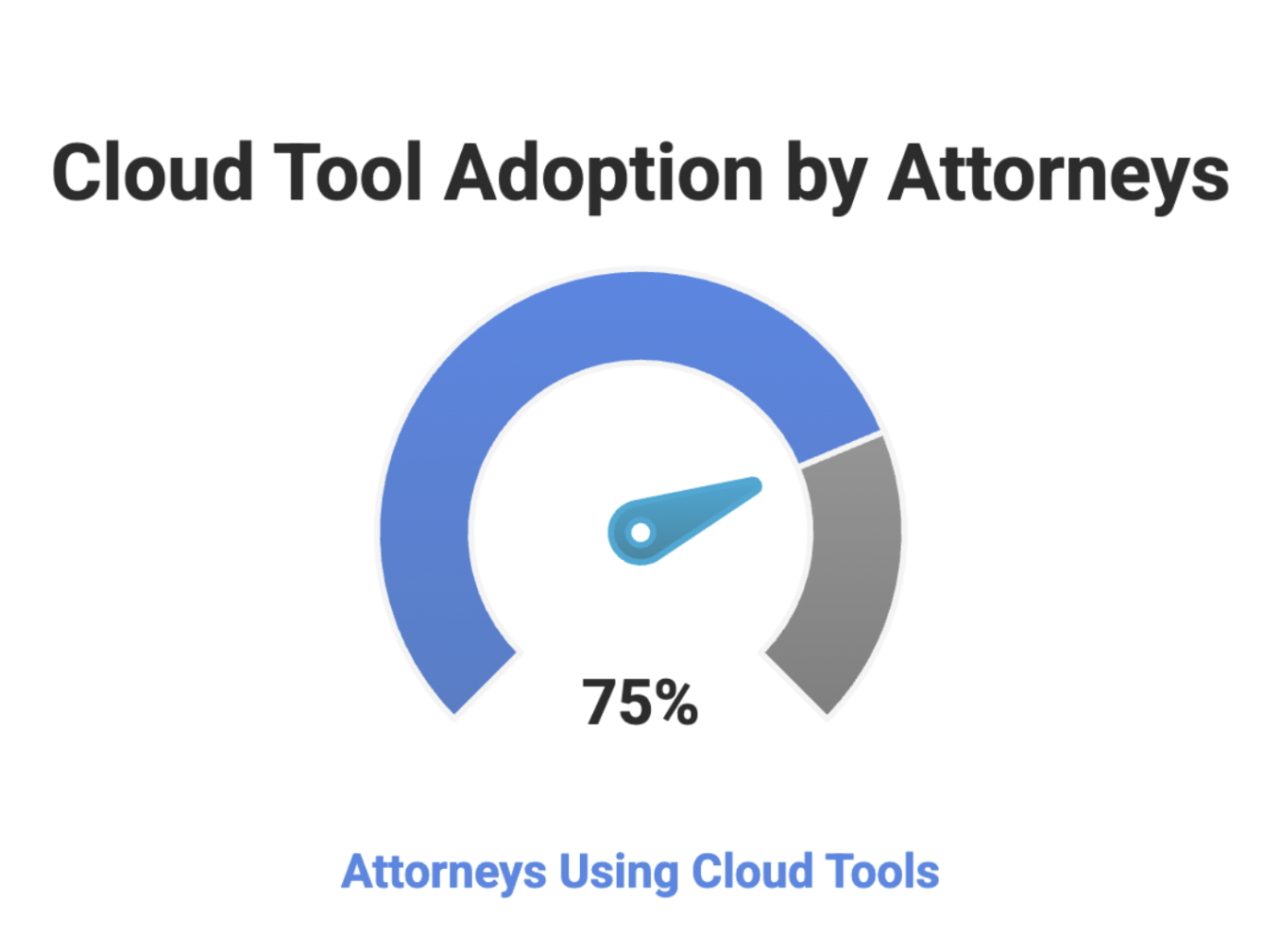
Cloud computing is now an industry standard. The ABA’s 2024 Cloud TechReport showed that 75% of attorneys use cloud platforms, compared with 69% in 2022. Firms rely on these tools for case management, document storage, and collaboration.
Adoption Rates and Efficiency Gains
Cloud platforms let teams and clients share files, edit documents, and update calendars in real time. Firms that migrated to the cloud report faster client intake, fewer delays, and lower IT costs.
Cost and Security Trade-Offs
Cloud systems lower upfront investment in servers and IT staff. But subscription fees, bandwidth costs, and vendor lock-in remain challenges. Security is also uneven. Nearly one in four solo attorneys admitted in 2024 said they had no security tools in place for cloud computing.
Client Expectations and Transparency
Clients expect direct access to documents and updates. Cloud portals and dashboards are now the baseline for communication. Firms that provide this level of transparency often see higher client satisfaction and retention.
Cybersecurity Becomes the Top Priority
Cyberattacks against law firms surged in 2024. Up to 40% of firms reported experiencing a breach. This includes ransomware attacks, which rose 30% that year, with demands often exceeding $500,000.
Rising Threat Landscape
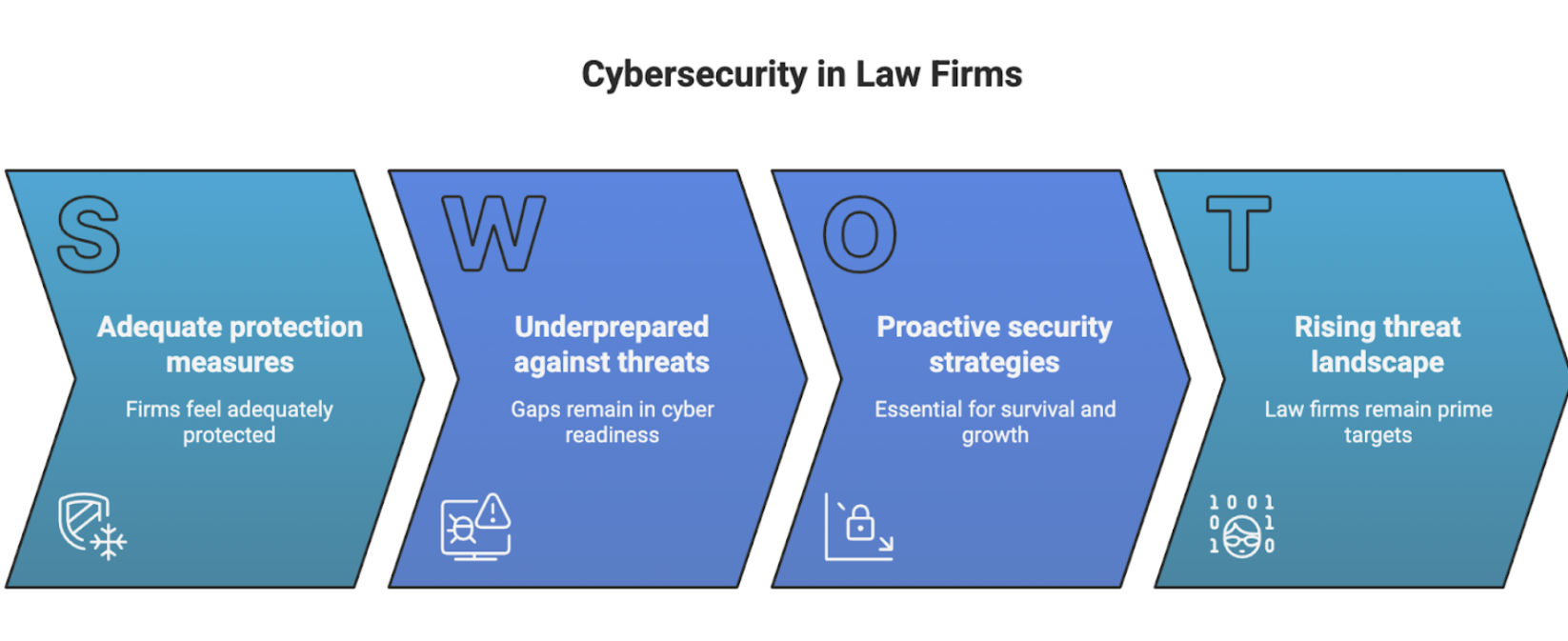
Law firms are prime targets because of the sensitive data they hold. Mid-sized firms are especially vulnerable. They manage high-value information but often lack the layered defenses of larger practices and corporate legal departments.
Compliance and Data Privacy
Firms face stricter requirements from both regulators and insurers. States such as California, Virginia, and Colorado now require stronger privacy measures. Insurers demand encryption, multi-factor authentication, and tested response plans before providing coverage. This is particularly important for emerging legal specializations handling sensitive data.
Ethical rules are also evolving. In 2024, the New York City Bar stated that lawyers must notify clients of cybersecurity incidents immediately, even during containment.
Building Cyber-Resilient Firms
Confidence in legal cybersecurity is improving but still uneven. In 2024, 76.7% of firms said they felt adequately protected, up from 71.7% in 2023. Still, nearly one in four admitted they were underprepared.
Blockchain and Smart Contracts Enter the Mainstream
Blockchain is gaining ground in legal practice. It supports document authentication, tamper-proof registries, and secure storage.
Smart contracts are also expanding. In 2025, 53% of legal departments worldwide reported using them, compared with 38% in 2023. North America leads, with 62% of firms adopting blockchain-powered contract tools.
Applications include intellectual property registries, land title systems, and digital notary services. Smart contracts now automate payments and milestone checks, reducing disputes.
Challenges remain, especially around enforceability. In 2024, 47% of disputes tied to smart contracts were linked to gaps in legal recognition and compliance.
Virtual Collaboration and Hybrid Courtrooms
Hybrid hearings are now part of the legal system. The ABA reported that 66% of U.S. attorneys still appeared in physical courtrooms in 2024. But remote and hybrid hearings remain common for motions and conferences, particularly for litigation specialists who can now manage cases more efficiently.
In England and Wales, the Bar Council has found that one in four hearings is now conducted remotely. Almost half of barristers believe online hearings should be used more often. Courts are also upgrading facilities, adding streaming and video technology to support hybrid models.
Data Analytics and Predictive Insights
Data analytics has moved from optional to essential. In April 2025, a survey of 415 law firm professionals showed that 95% see analytics as valuable to practice.
Litigation Outcome Prediction
AI-driven analytics now help firms forecast case outcomes with increasing accuracy. One case study from the ABA showed a predictive AI tool forecasting an 80% chance of success at trial. The firm used that insight to shape its strategy and won.
Business Intelligence for Firms
Beyond litigation, firms are using analytics to forecast revenue, track profitability, and benchmark performance. The Am Law 100 reported average profits per equity partner of $3.15 million in 2024, a 12% increase tied partly to better use of data.
Clients are also demanding more transparency. Many now expect firms to share metrics on staffing, efficiency, and costs in engagement letters and pitches.
Career Impact of Legal Technology in 2025
Technology is reshaping legal careers across all specializations as much as client service.
Shifting Skills for Lawyers and Paralegals
Lawyers now need data literacy, prompt engineering, and AI collaboration skills. Paralegals are learning automated workflows and e-discovery tools. Continuing education focuses on AI governance, cybersecurity, and privacy compliance.
New Legal Tech Roles Emerging
Firms are hiring specialists such as legal technologists, litigation support analysts, and AI ethics officers. Salaries for legal technologists average $118,674, with top earners exceeding $150,000. Entry-level litigation support specialists earn around $45,000, while senior professionals can exceed $100,000.
Education and Certification Paths
Universities and certificate programs are expanding in response. Cornell launched an AI Law & Policy certificate in 2025, and Duke introduced an AI and Security for Leaders program. CLE credits focused on tech adoption are also becoming common.
Conclusion
Legal technology in 2025 is not optional. From AI drafting to blockchain contracts and predictive analytics, these tools are now central to how law firms operate. Firms that adopt responsibly are gaining measurable advantages in efficiency, transparency, and profitability.
The responsibility is clear. Lawyers must balance innovation with cybersecurity, ethics, and compliance. Those who combine digital fluency with sound professional judgment will be best positioned to thrive in the years ahead.
